
how to pack clothes without wrinkles comes down to two things you can control every trip: how much friction your clothes experience in the suitcase, and how tightly everything gets compressed.
If you’ve ever opened your bag to find deep creases across a dress shirt or a pile of rumpled tees, it’s rarely “bad fabric” or “a cheap suitcase.” Most of the time, it’s a packing method that lets garments shift, fold sharply, and get crushed in the wrong places.
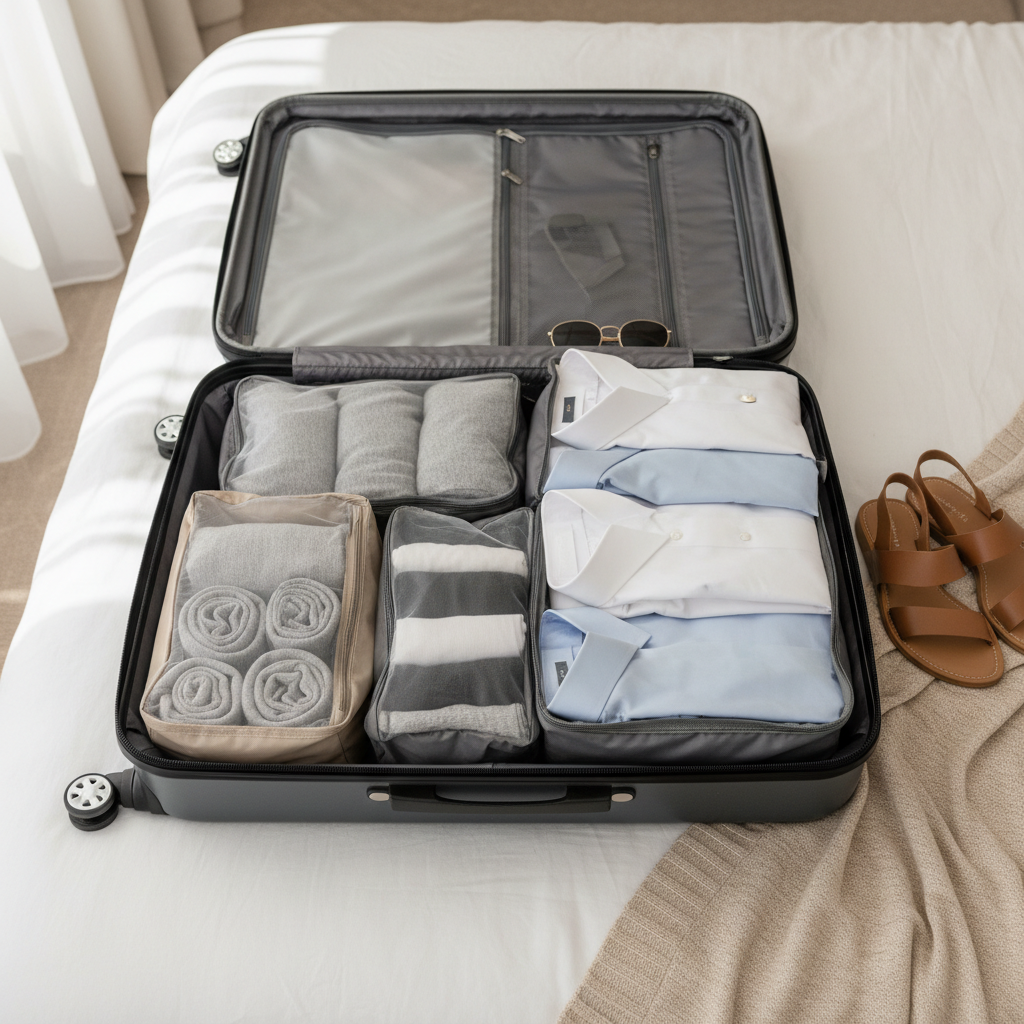
This guide focuses on practical, repeatable tactics: choosing the right fold for each fabric, using simple barriers like tissue paper to reduce creasing, and packing in an order that keeps pressure off your “must-look-good” items. You’ll also get a quick self-check and a small decision table so you can stop overthinking it.
Why clothes wrinkle in luggage (the real reasons)
Wrinkles form when fibers bend and stay bent under pressure. In a suitcase, that pressure typically comes from weight, tight compression, and sharp folds that act like “crease hinges.”
- Overstuffing: When you sit on a bulging bag to close it, you’re basically heat-pressing folds into fabric.
- Hard creases from the wrong fold: A crisp fold down the center of a knit tee often becomes a permanent-looking line.
- Friction and shifting: Clothes sliding around create micro-folds, then layers on top lock them in.
- Moisture + compression: Damp items or humid environments can make wrinkles set more easily.
According to TSA, if you’re carrying liquids or aerosols for garment care, you still need to follow the 3-1-1 rule in carry-ons, which matters if you plan to bring wrinkle-release sprays in a cabin bag.
A quick self-check: what kind of wrinkling problem do you have?
Before changing everything, figure out what’s actually causing the mess. Most travelers fall into one (or two) patterns.
- “I pack too much”: Zippers strain, suitcase has rounded edges, clothes come out with deep creases.
- “My clothes shift”: Bag isn’t full, but items look tumbled and crumpled on arrival.
- “My fabrics are fussy”: Linen, viscose/rayon, thin cotton, or structured shirts wrinkle fast even with careful packing.
- “It’s a long trip day”: Multiple flights, tight overhead bin space, frequent handling, and delays mean more compression cycles.
If you identify with the first one, your best “wrinkle hack” might be editing outfits. If it’s the second, you need containment like packing cubes or tighter layering.
Pick the right method: fold, roll, bundle, or cube?
There isn’t one universal technique. What works for jeans can ruin a blazer. Use this quick table to match method to garment type and trip style.
| Item | Best packing method | Why it helps | Extra tip |
|---|---|---|---|
| T-shirts, knits, workout wear | Roll | Reduces sharp creases, fills gaps | Roll around a soft core like socks |
| Dress shirts, blouses | Fold with tissue or plastic | Less friction, smoother layers | Keep collars supported |
| Suits, blazers | Bundle wrap | Avoids hard fold points | Use a garment folder if possible |
| Jeans, chinos | Flat fold | Fabric tolerates creasing better | Place near wheels for stability |
| Dresses, skirts | Half-fold + light roll | Minimizes harsh crease lines | Keep on top, don’t compress |
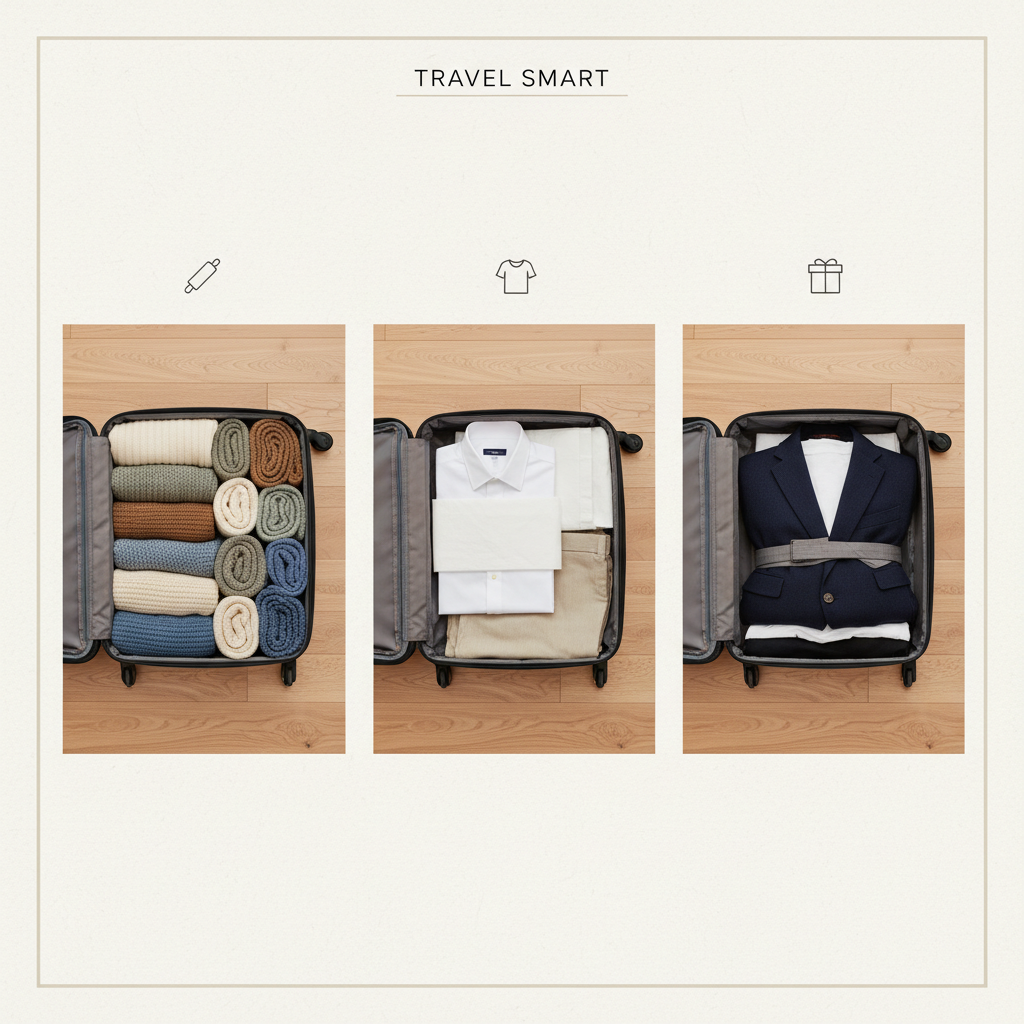
If you’re trying to how to pack clothes without wrinkles for a wedding or work trip, prioritize fewer “high-stakes” pieces and give them the safest method, then pack casual items around them.
Step-by-step packing order that prevents creases
This sequence works well for most standard suitcases, especially when you want outfits to arrive wearable with minimal touch-up.
1) Start with a stable base
- Lay heavier items flat first: jeans, sweaters, structured pants.
- Keep weight near the wheel side so the bag doesn’t slump and crush the top layers.
2) Add “smooth layers” before the fussy pieces
- Use a thin barrier like tissue paper or dry-cleaner plastic between fold layers.
- This reduces friction, so folds don’t bite into the fabric as much.
3) Pack dress shirts and blouses with collar support
- Button the top 1–2 buttons to keep the placket aligned.
- Stuff the collar with clean socks or a small scarf to prevent collapse.
4) Fill edges and gaps to stop shifting
- Use rolled tees, underwear, or socks to fill corners.
- Less movement means fewer surprise wrinkles.
5) Keep the top layer “low pressure”
- Place dresses, skirts, or a blazer bundle last, then close gently.
- If closing requires force, remove one item rather than “making it work.”
Use packing tools (and which ones actually matter)
Tools help, but only when they solve the right problem. If your suitcase looks organized but your shirts still crease, the issue might be compression and fold points, not organization.
- Packing cubes: Great for stopping shifting and separating categories. Don’t overstuff cubes, tight cubes can create cube-shaped wrinkles.
- Garment folder: Helpful for dress shirts and business outfits because it keeps layers flat and controlled.
- Tissue paper or thin plastic: Surprisingly effective for reducing friction inside folds.
- Compression bags: Good for saving space, but many cases increase wrinkling, especially for cotton shirts and linen.
According to the American Cleaning Institute, following textile care instructions on garment labels helps prevent damage and maintain fabric appearance. It’s not glamorous advice, but it’s relevant if you’re packing delicate or structured pieces that react poorly to heat or aggressive steaming later.
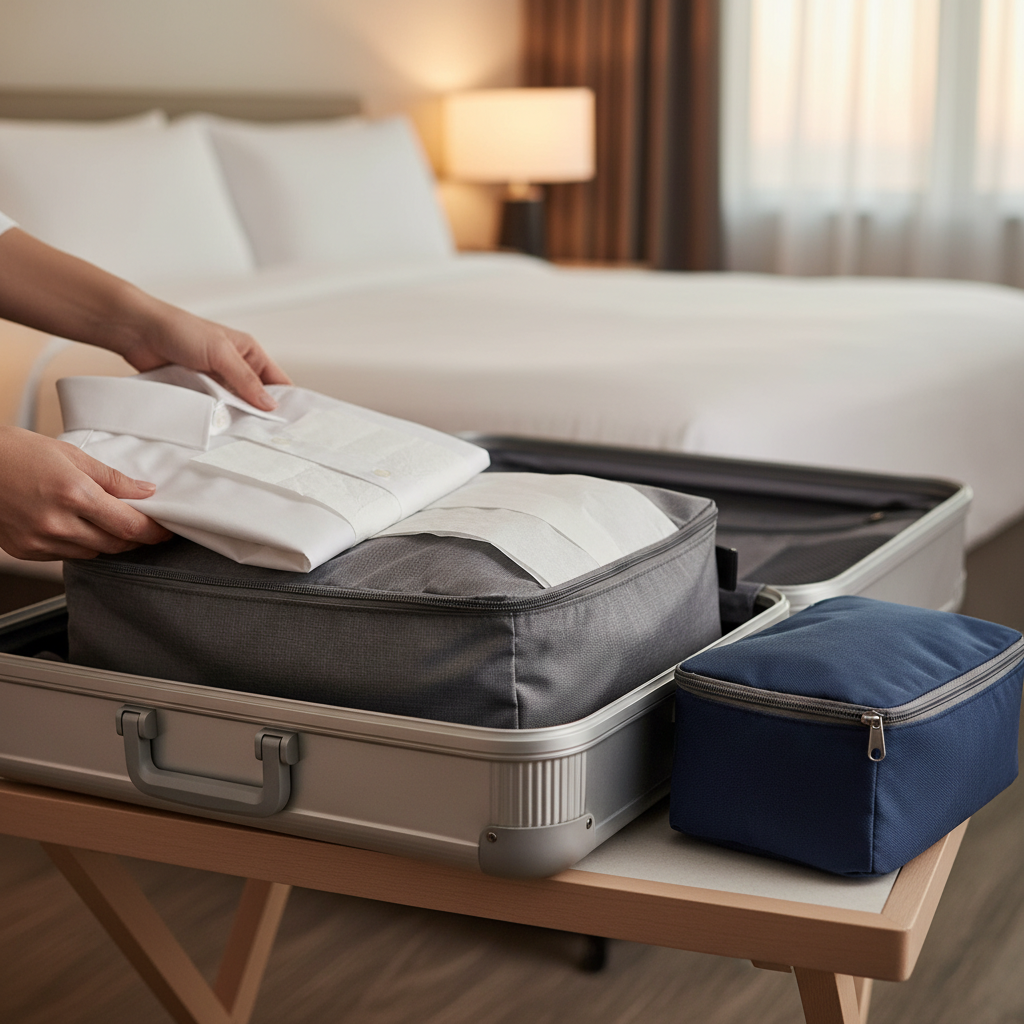
If you’re trying to how to pack clothes without wrinkles and you already own cubes, the upgrade is usually your technique: looser fills, better layering, and fewer sharp folds on the pieces you care about.
On-arrival fixes: what to do when wrinkles still happen
Even with good packing, travel can be unpredictable. The goal becomes “wearable fast,” not perfection.
- Hang items immediately: Gravity helps relax light wrinkles over a few hours.
- Use steam, not direct heat: A garment steamer is generally gentler than an iron for travel touch-ups. If you’re unsure about fabric, consider testing on an inside seam.
- Shower steam trick: Hang clothes in the bathroom with a hot shower running, door closed. It won’t erase deep creases, but it can soften them.
- Wrinkle-release spray: Useful for knits and casual fabrics. Follow label directions and spot-test, some fabrics can water-spot.
If you’re staying somewhere with laundry service or hotel pressing, that can be a practical option for suits or formalwear, especially when time matters more than DIY effort.
Common mistakes that make wrinkles worse
A few habits look harmless but reliably cause creases, especially on business trips.
- Overpacking “just in case”: More items usually means more compression, not more options.
- Folding everything the same way: One fold style can’t suit both a knit tee and a structured shirt.
- Packing slightly damp clothes: Even a little moisture can set wrinkles during transit.
- Putting heavy shoes on top: Shoes belong at the bottom, ideally bagged, acting as structure.
- Ignoring what you’ll wear first: Digging through your suitcase creates new wrinkles, even if you packed well.
Key takeaway: if you want fewer wrinkles, aim for less movement and fewer sharp fold points, then avoid crushing your top layers when you close the bag.
When it’s worth getting professional help (or upgrading gear)
If you travel frequently for work, or you routinely pack suits, silk, or other delicate fabrics, a few upgrades can be more efficient than constant troubleshooting.
- Professional dry cleaning/pressing: For formalwear and structured garments, pressing can restore shape better than home methods.
- Garment bag or carry-on with a suit compartment: Often reduces the need for aggressive folding.
- Tailor advice for recurring issues: If a fabric creases unusually fast, it might be the weave or fit. A tailor can suggest lining, fabric choice, or construction changes, depending on the item.
If you’re dealing with specialty fabrics or expensive garments, it’s reasonable to ask a cleaner or tailor before trying high-heat tools, since heat damage and shine marks are hard to undo.
Wrap-up: a simple routine that works on most trips
Most people learn how to pack clothes without wrinkles when they stop chasing a “magic fold” and start packing with intention: stabilize the base, protect fussy items from friction, reduce shifting, then close the bag without forcing it.
If you want an easy next step, pick two changes for your next trip, use tissue paper for dress shirts, and commit to not overstuffing the suitcase. You’ll usually see a difference immediately, and you’ll spend less time trying to rescue outfits after check-in.
FAQ
How do I pack dress shirts without wrinkles for a business trip?
Button the top buttons, support the collar, and fold with tissue paper or thin plastic between layers. Keep shirts near the top and avoid placing heavy items on them.
Is rolling clothes better than folding for preventing wrinkles?
Rolling works well for knits and casual pieces because it avoids sharp creases. For structured items like dress shirts, careful folding or a garment folder tends to look cleaner on arrival.
Do packing cubes prevent wrinkles or cause them?
They can do either. Cubes reduce shifting, which helps, but overpacked cubes create pressure lines. Pack cubes so you can zip them without bulging.
What fabrics wrinkle the most in luggage?
Linen and many rayon blends wrinkle easily, and thin cotton can crease sharply. Wool and many synthetics often travel better, though it depends on weave and garment construction.
How can I pack a blazer or suit jacket in a carry-on?
Bundle wrapping around a soft core can reduce hard fold points. If your carry-on has a suit compartment, use it, and keep the jacket away from shoes and rigid items.
What’s the fastest way to remove wrinkles at the hotel?
Hanging garments right away plus steam usually works fastest. If you use a hotel iron, use a lower setting first and consider a pressing cloth to reduce shine on delicate fabrics.
Can I bring a wrinkle-release spray on a plane?
Usually yes if it meets carry-on liquid rules. According to TSA, liquids in carry-ons must follow the 3-1-1 rule, so check bottle size and pack it correctly.
How do I stop clothes from shifting inside the suitcase?
Fill gaps with rolled small items, use cubes for containment, and pack heavier items at the base. A suitcase that’s either too empty or too stuffed tends to create more movement and creasing.
If you’re trying to travel light but still want outfits that look sharp, it often helps to build a small “wrinkle-safe” packing system, a couple cubes, tissue paper, and a repeatable order, so you don’t reinvent the process every trip.