
How to choose travel insurance for vacation usually comes down to one thing, figuring out what could realistically go wrong on your trip, then paying for coverage that matches that risk instead of buying the biggest plan on the shelf.
If you have ever tried to compare policies, you already know the headache, similar-sounding benefits, fine print that changes the meaning, and a price range that makes you wonder what is missing. The goal is not perfection, it is a plan that pays when you need it, without paying for coverage you cannot use.

This guide focuses on practical choices, what to check first, what to ignore, and how to compare plans quickly. You will also get a simple table you can use to narrow options in minutes.
Start with your trip profile, not the policy
Before you shop, outline the trip in plain language, where you go, what you paid upfront, and what would sting if it fell apart. This keeps you from buying coverage that looks impressive but does not match your situation.
- Trip cost at risk: prepaid, nonrefundable items such as tours, deposits, flights booked with restrictive fares, and lodging rules.
- Destination and medical expectations: domestic travel looks different from international travel, especially around emergency care and transport.
- Trip style: cruises, road trips, multi-country itineraries, and adventure activities tend to trigger different exclusions.
- Traveler factors: age, existing conditions, pregnancy, or traveling with kids can change which benefits matter.
According to the U.S. Department of State, travelers should consider how they will handle medical care and emergency evacuation when abroad, because many U.S. health plans do not cover you outside the United States. That advice is less about fear and more about planning for expensive edge cases.
Know what travel insurance actually covers (and what it often does not)
Most plans bundle a few core benefits, then add optional upgrades. The hard part is that the same benefit name can hide different rules.
Common benefits you will see
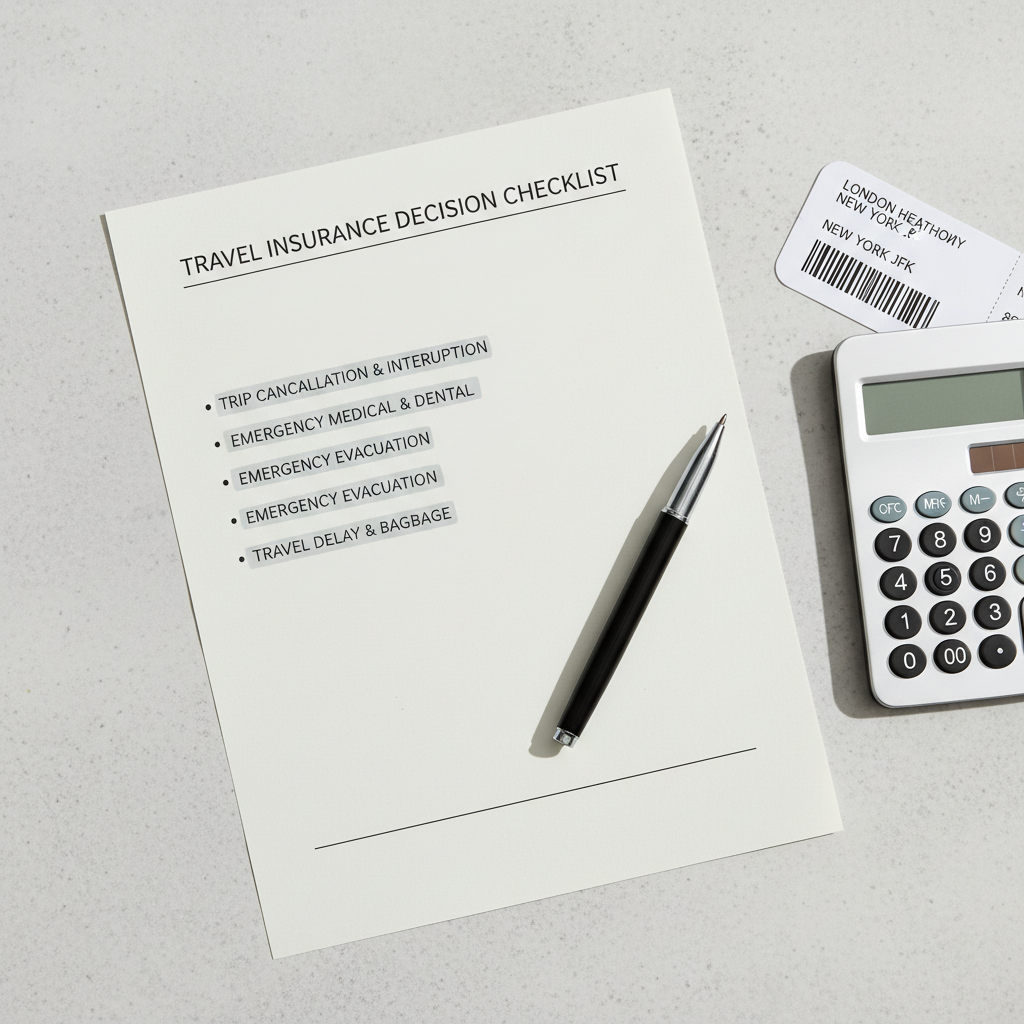
- Trip cancellation: reimburses prepaid expenses if you cancel for a covered reason.
- Trip interruption: helps if you must cut the trip short after it starts, sometimes including extra transport home.
- Trip delay: reimburses meals and lodging when a covered delay forces an overnight stay.
- Baggage delay or loss: pays for essentials after a delay, or replaces covered items up to limits.
- Emergency medical: pays eligible medical costs during the trip, subject to limits and exclusions.
- Medical evacuation: helps cover transport to appropriate care or back home if medically necessary.
Exclusions that surprise people
- “Any reason” is rarely included: cancellation typically requires a covered reason spelled out in the policy.
- Pre-existing conditions: coverage may be limited unless you meet a waiver requirement and buy within the time window.
- High-risk activities: some plans exclude scuba, backcountry skiing, motorbike riding, or guided climbs unless you add an adventure rider.
- Known events: once an event is “foreseeable” or publicly known, claims may be denied, definitions vary.
When you are learning how to choose travel insurance for vacation, treat exclusions as the main story, and the benefit list as the marketing summary.
Pick the coverage types that match your biggest financial risk
Not every trip needs every add-on. Most travelers get the best value by prioritizing what could be financially painful or logistically disruptive.
If your trip is expensive and nonrefundable
- Emphasize trip cancellation and trip interruption.
- Check the definition of covered reasons, especially around illness, family emergencies, work issues, and weather.
- Consider Cancel For Any Reason (CFAR) only if your main anxiety is flexibility. Many CFAR options reimburse a percentage, require early purchase, and require you to cancel a certain number of hours before departure.
If you are going abroad
- Prioritize emergency medical and medical evacuation, because the out-of-pocket ceiling can be the real risk.
- Confirm whether your plan is primary or secondary for medical, secondary can mean more paperwork and coordination.
If you are taking a cruise
- Look closely at missed connection and medical evacuation, because getting to the next port can be pricey.
- Confirm coverage for shipboard medical and emergency transport logistics.
If you mostly worry about delays
- Focus on trip delay triggers and the minimum delay hours, plus per-day and max caps.
- Skim baggage delay rules if you check luggage, since essentials coverage varies widely.
Use this quick comparison table to narrow options
Use the table as a first-pass filter. You can fill it in using any insurer or marketplace quote page, then confirm details in the policy certificate.
| What to compare | What “good” often looks like | What to watch |
|---|---|---|
| Trip cancellation / interruption | Limits that roughly match your prepaid risk | Covered reasons list, documentation requirements |
| Trip delay | Reasonable daily cap and low minimum delay threshold | Delay must be from covered causes, receipts needed |
| Emergency medical | Higher limits for international travel | Secondary vs primary, exclusions, sports restrictions |
| Medical evacuation | Coverage that fits remote or multi-country itineraries | “To nearest adequate facility” wording, approvals process |
| Pre-existing condition waiver | Available if purchased early after first trip payment | Time window, stability period, eligibility rules |
| Claim process | Clear documentation list and contact options | Ambiguous timelines, complex reimbursement steps |
A practical self-check: which plan type fits you?
If you only remember one part of how to choose travel insurance for vacation, make it this, match plan type to your “why” for buying insurance.
- You mainly want to protect big prepaid costs: prioritize strong cancellation and interruption, consider CFAR only if flexibility is the whole point.
- You mainly want medical peace of mind overseas: choose higher emergency medical and evacuation, and read exclusions carefully.
- You travel frequently: an annual multi-trip plan can be simpler, but confirm per-trip length limits and whether trip cancellation is included or optional.
- You booked mostly refundable items: you might only need medical and delay coverage, paying for full cancellation could be wasted.
One more reality check, many issues are solved without insurance by booking smart, refundable lodging, flexible fares when it matters, and using a credit card with travel protections. Insurance is the backup when flexibility is not available or the medical risk is the big unknown.
How to buy and verify a policy without getting burned
This is the “do it in 20 minutes” approach that tends to work for busy travelers.
Step-by-step
- List your nonrefundable costs and your travel dates, then decide your must-have benefits.
- Quote 2–3 plans from reputable providers or marketplaces, ignore the fluff add-ons at first.
- Open the policy certificate and search for “covered reasons,” “pre-existing,” “adventure,” “foreseeable,” and “documentation.”
- Confirm deadlines for waivers and CFAR, these rules are often time sensitive.
- Save proof, receipts, booking terms, and delay notices help if you file a claim later.

Key point: the marketing page is not the contract. The certificate and policy wording decide claims, so you want to read at least the sections that define covered reasons and exclusions.
Common mistakes that make coverage useless
Most claim frustrations come from small mismatches between expectations and policy rules.
- Buying too late and missing a pre-existing condition waiver window.
- Assuming “cancel anytime” when the plan only covers specific reasons.
- Underinsuring the real risk, for example buying minimal evacuation coverage for remote travel.
- Not documenting delays, airlines and hotels can provide written statements, but you often must ask.
- Ignoring activity exclusions, if you plan to ride a scooter in Thailand or ski off-piste, check wording before you buy.
According to the National Association of Insurance Commissioners (NAIC), consumers should read the policy and ask questions about exclusions and claim procedures before purchasing. That is boring advice, but it is also the difference between a smooth reimbursement and a denial you did not expect.
When it makes sense to talk to a professional
If your trip has higher stakes, it can be worth speaking with a licensed travel insurance agent or broker who can explain tradeoffs. You are not looking for hype, you want someone who will point out conflicts between your needs and the policy terms.
- Complex medical situations: pre-existing conditions, pregnancy, or recent treatment changes, coverage rules vary and you may want professional guidance.
- Very expensive trips: destination weddings, safaris, long cruises, or tours with strict cancellation penalties.
- Unusual itineraries: remote locations, expedition travel, or long multi-country plans where evacuation logistics matter.
This is not medical or legal advice, and if you have health questions about travel, it is usually smart to consult a qualified medical professional as well.
Conclusion: a simple way to decide today
Choosing coverage gets easier when you stop shopping for “the best travel insurance” and instead shop for the plan that covers your biggest risk, often nonrefundable costs, overseas medical exposure, or the domino effect of delays. If you want a clean next step, write down your top two worries, compare three policies using the table above, then buy early enough to keep waiver options open.
If you do that, how to choose travel insurance for vacation turns from a confusing purchase into a quick checklist decision, and you can move on to planning the fun parts.
FAQ
- Is travel insurance worth it for a domestic vacation?
It can be, but usually for specific risks like high nonrefundable deposits or a tight schedule where delays create extra hotel nights. If most bookings are refundable, a lighter plan or credit card protections may be enough. - What is the difference between trip cancellation and trip interruption?
Cancellation applies before you depart, interruption applies after the trip starts. Interruption often covers additional transport costs, but only under the policy’s covered reasons. - How much emergency medical coverage should I get for international travel?
There is no single right number, but many travelers lean toward higher limits abroad because costs and payment expectations can differ by country. If you have health concerns, it is reasonable to ask a licensed agent to help you match limits to itinerary risk. - Does travel insurance cover COVID or other illness?
Many plans treat COVID like other illnesses, but rules vary by insurer and timing, and exclusions can apply. Read the covered reasons language and any epidemic-related terms in the policy certificate. - What is CFAR and when should I consider it?
Cancel For Any Reason can reimburse part of your trip if you cancel for reasons not otherwise covered, but it usually costs more and has strict purchase and cancellation timing rules. It is most useful when flexibility is the main goal, not as a default add-on. - Will my credit card replace travel insurance?
Sometimes it covers parts like trip delay, rental car damage, or baggage, but benefits can be limited and tied to paying with that card. Compare your card’s guide to benefits against what you want to protect, especially medical and evacuation, which are often not included. - What documents do I need to file a travel insurance claim?
Often you need receipts, proof of payment, booking terms, and written statements for delays or cancellations, plus medical notes when health issues trigger the claim. The exact list depends on the benefit and insurer, so it helps to save paperwork as you travel.
If you are still torn between two plans, or you want a faster way to compare benefits without reading five PDFs end to end, consider using a travel insurance marketplace or talking with a licensed agent so you can sanity-check exclusions and pick a plan that fits your trip profile.