
Rental car travel tips matter most when you’re landing tired, standing at a counter in a different country, and realizing your “simple” booking didn’t include what you assumed. A lot of problems international drivers run into aren’t dramatic, they’re small misunderstandings that snowball: the wrong license format, a credit card hold you didn’t expect, a fuel policy you misread, or insurance terms that don’t translate cleanly.
This guide focuses on the practical moves that reduce friction: what to confirm before you fly, what to say at the counter, what to check on the car, and how to avoid common fees. I’ll also flag a few areas where rules vary by country, because the fastest way to get stuck is assuming the U.S. approach applies everywhere.

If you want one theme to remember, it’s this: international rentals reward confirmation. A two-minute check of documents, insurance wording, and local driving rules usually saves more time than any “skip the line” upgrade.
Know what you’re booking (and what you’re not)
Many international drivers book on price and only discover later that the cheapest rate often excludes things you mentally count as “standard,” like an automatic transmission, a second driver, or meaningful coverage. The booking page can be technically accurate and still feel misleading if you’re skimming.
Before you lock in a reservation, verify these items in writing on the confirmation:
- Transmission type: in many countries, manual cars dominate and automatics cost more.
- Mileage: unlimited vs. capped kilometers, plus overage fees.
- Fuel policy: “full-to-full” usually favors you, while “prepaid” or “full-to-empty” often costs extra.
- Cross-border travel: driving into another country may be restricted or require a paid permit.
- One-way returns: drop fees can be significant, even within the same country.
One more detail people underestimate: pick-up and drop-off hours. Returning after hours can shift responsibility for damage timing, depending on the location’s policy.
Documents and payment: avoid the counter “no”
When international drivers get turned away, it’s usually because the company can’t verify identity, eligibility, or payment. The fix is boring, but it works.
Bring the right license combination
Some countries accept a U.S. driver license, others expect an International Driving Permit (IDP) alongside your license. According to the U.S. Department of State, many countries recommend or require an IDP for foreign drivers, and it’s meant to accompany (not replace) your valid U.S. license.
- Carry both: your U.S. license + IDP if your destination expects it.
- Match the name: ensure passport name and booking name align to reduce friction.
- Check age rules: under-25 surcharges and age minimums vary widely.
Use a credit card you control
A common surprise is the security deposit (authorization hold). Debit cards sometimes work in certain locations, but many airport counters prioritize major credit cards in the primary driver’s name. If your card has a low limit, the hold can cause a decline even if you “have the money.”
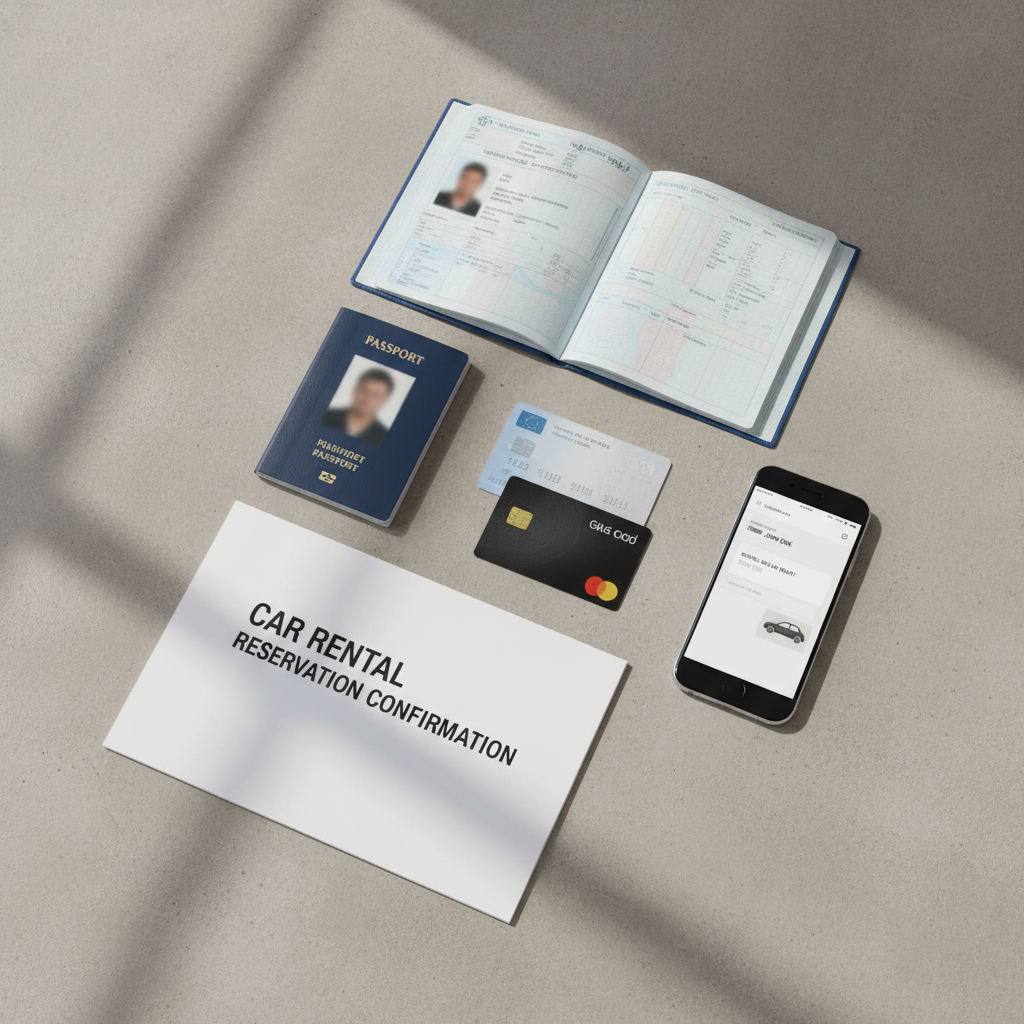
Quick counter-ready checklist:
- Passport
- U.S. driver license
- IDP (if applicable)
- Credit card in primary driver’s name
- Reservation confirmation with inclusions listed
Insurance abroad: translate the terms before you sign
Insurance is where international rentals feel the most confusing because similar words can mean different things. Also, what you “already have” in the U.S. may or may not extend overseas.
According to the Insurance Information Institute, auto insurance coverage varies by policy and situation, and you generally need to review your own policy details to know what applies. In practice, it’s worth calling your insurer before your trip and asking one specific question: “Does my policy cover me while driving a rental car in country X, and what does it exclude?”
At the counter you’ll typically see options that look like these (names vary):
- CDW/LDW (collision/loss damage waiver): often limits what you owe for vehicle damage, but can include exclusions.
- Liability coverage: pays for damage/injury you cause to others; required levels vary by country.
- Theft protection: may be bundled or separate.
- Personal accident/contents: usually optional, sometimes redundant with travel insurance.
Two details to look for in the fine print because they drive real costs:
- Deductible/excess: what you pay before coverage helps.
- Exclusions: gravel roads, off-road driving, certain neighborhoods, leaving keys in the car, or not filing a police report.
Inspect the car like you mean it (photos save arguments)
Most disputes happen after return, when you’re already home and can’t easily defend yourself. A short inspection routine keeps things clean without turning you into a paranoid person in the parking lot.
Pickup inspection (5 minutes)
- Walk around and video the exterior, slow and close, including roof and bumpers.
- Photo existing scratches and wheel/rim scuffs, then ensure they’re noted on the checkout form or in the app.
- Check windshield chips, mirrors, headlights, and tire condition.
- Confirm fuel level and odometer match the agreement.
Return routine (2 minutes)
- Refuel according to the policy and keep the receipt, even if you paid at the pump with a card.
- Repeat a quick exterior video at the drop location.
- If possible, get a written return receipt showing “no damage” or “checked in.”
This is one of those rental car travel tips that feels excessive until the one time it isn’t.
Road rules that catch U.S. drivers off guard
You can be a great driver in the U.S. and still get tripped up abroad because the “defaults” change. Many international drivers struggle most with signage, right-of-way logic, and enforcement tech.
Common gotchas by destination (varies by country and even region):
- Roundabouts: who yields, lane choice, and signaling rules differ.
- Speed cameras: tickets may arrive weeks later through the rental company, sometimes with admin fees.
- Right-on-red: often not allowed unless explicitly posted.
- School zones and bus lanes: enforcement can be strict, signage easy to miss at first.
- Toll systems: pay booths, vignettes, plate-scanning, congestion charges, all exist.
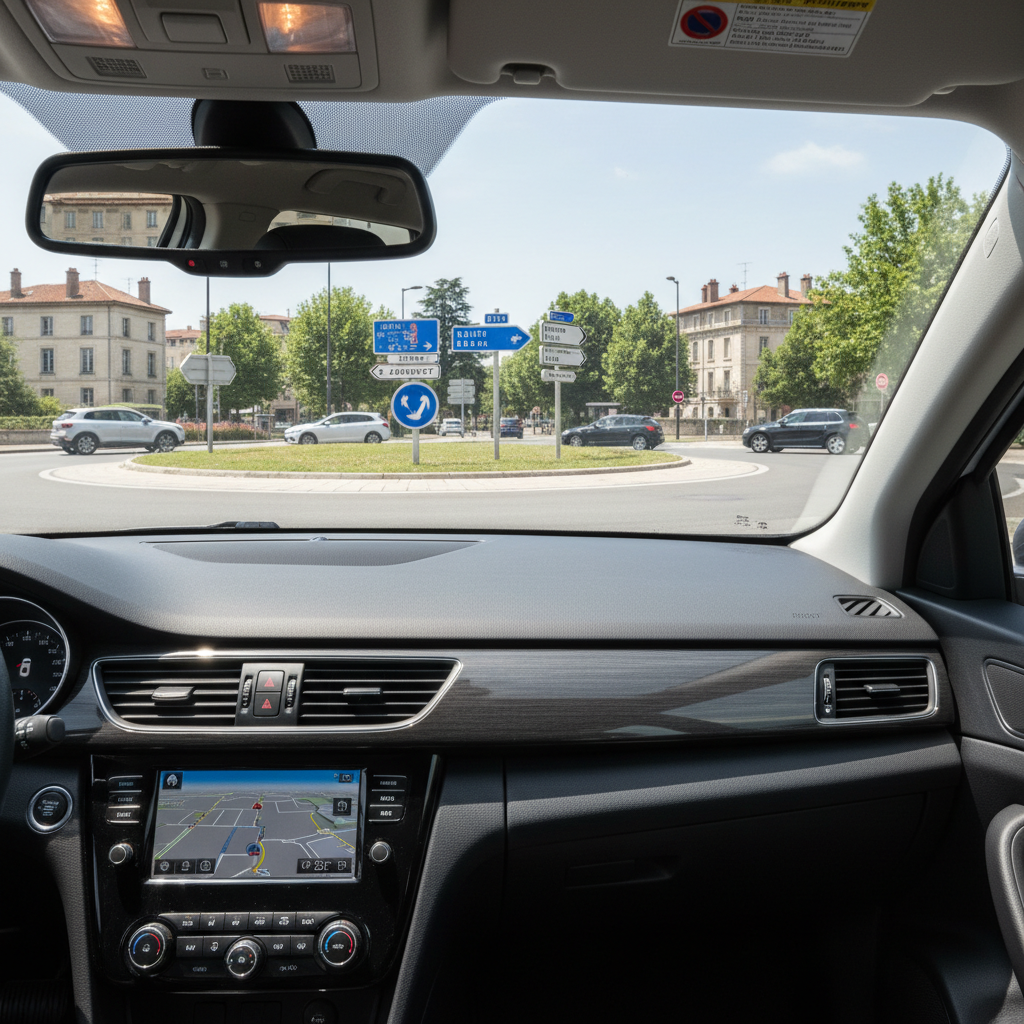
If you’re unsure about a rule, it’s usually safer to slow down, follow posted signs, and avoid improvising. For complex locations like city centers with congestion zones, consider parking outside and using transit for the densest areas.
Fees and add-ons: a quick decision table
Add-ons aren’t always “bad,” but they’re easy to buy reflexively when you’re jet-lagged. The table below helps you decide what’s typically worth it.
| Item at the counter | When it may be worth it | When to skip or double-check |
|---|---|---|
| GPS navigation | If your phone plan won’t work and you’ll drive rural routes | If you have offline maps or a reliable international data plan |
| Prepaid fuel | If your schedule makes refueling unrealistic before return | If you can do full-to-full and keep the receipt |
| Toll device/pass | If you’ll hit toll roads daily and want fewer payment hassles | If the program adds high daily fees or you can pay tolls directly |
| Additional driver | If you’ll share long drives and want the second driver covered | If you won’t actually switch drivers, or the fee is per day |
| Extra insurance | If your existing coverage doesn’t apply internationally or deductibles are high | If you already confirmed coverage and the waiver terms are redundant |
Key point: don’t be afraid to ask for the total cost with and without each add-on, in writing on the quote screen, before you agree.
A practical pre-trip plan (and a day-of checklist)
Here’s a compact set of rental car travel tips you can actually use without turning trip prep into a second job.
48 hours before your flight
- Confirm license/IDP needs for your destination.
- Call your insurer and ask about international rental coverage; note any exclusions.
- Verify booking details: transmission, mileage, fuel, cross-border rules.
- Save offline maps and key addresses in your phone, including the return location.
At pickup
- Ask what the security hold amount will be before swiping your card.
- Confirm fuel policy and after-hours return process.
- Do the photo/video inspection and ensure damage notes match what you see.
On the road
- Learn the local emergency number and keep the rental company’s roadside number handy.
- If there’s an incident, document calmly, follow local requirements, and consider contacting local authorities if policy language suggests it.
Conclusion: keep it simple, confirm the big three
International rentals become much less stressful when you focus on three confirmations: documents (license + IDP if required), insurance terms (what’s covered and what’s excluded), and fees (fuel, tolls, extra drivers, deposits). Do those well and most trips feel routine, even if you’re driving on unfamiliar roads.
If you’re booking soon, take five minutes today to re-open your confirmation and verify transmission, fuel policy, and payment requirements, that small check tends to prevent the most common travel-day headaches.