
Travel deodorant mini size products can be a lifesaver when you’re living out of a carry-on, but they also tend to disappoint when you pick the wrong formula or use them like your full-size stick.
If you’ve ever landed, checked into a hotel, and realized you smell less “fresh” and more “airport day,” you’re not alone. Travel days mix stress sweat, dry cabin air, long layers of clothing, and fewer chances to shower, so a mini deodorant has to work a little harder than it does at home.
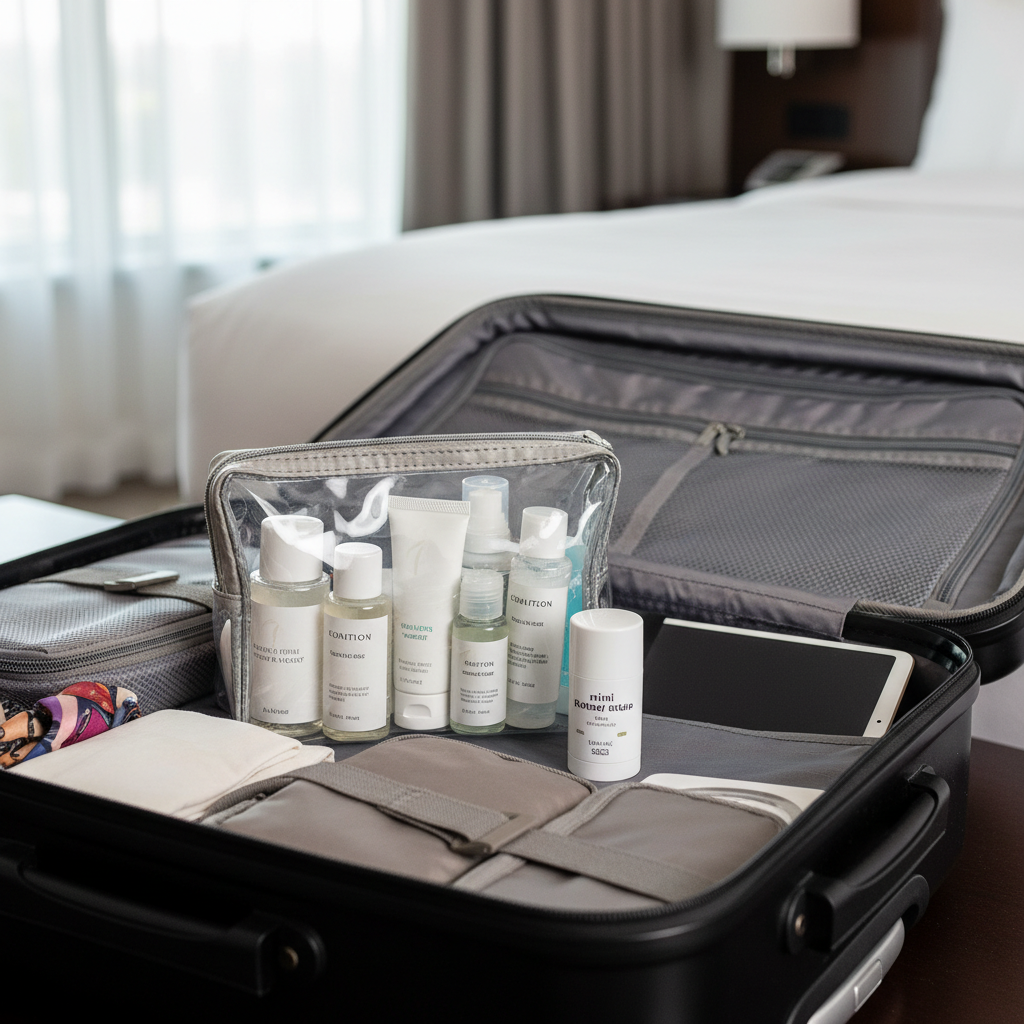
This guide helps you choose a mini that matches your sweat pattern, your skin, and your packing style. We’ll also cover a quick “airport bathroom reset,” what TSA actually cares about, plus a simple comparison table so you can decide fast.
Why mini deodorants feel “weaker” on trips (and it’s not always the product)
A small stick or mini spray can be just as effective as a full size, but travel adds friction. In real life, a few common issues show up again and again.
- You’re mixing up deodorant vs. antiperspirant. Deodorant targets odor, antiperspirant reduces sweat. If your main problem is wetness, deodorant alone may feel like it “fails.”
- Reapplication happens on top of sweat. Putting product over damp skin often traps odor instead of preventing it.
- Clothing re-wear is higher on trips. Odor can cling to fabric, so even a great formula can’t fully “fix” a shirt that already holds bacteria.
- Mini packaging changes behavior. People swipe less because they want the mini to last, then wonder why coverage feels light.
According to the American Academy of Dermatology (AAD), antiperspirants work best when applied to dry skin, often at night, because the active ingredients need time to form temporary plugs in sweat ducts.
Quick self-check: what kind of “freshness” problem do you actually have?
Before you buy another travel deodorant mini size, get clear on what you’re solving. The fix is different for wetness, odor, or irritation.
- Main issue: sweat marks → look for an antiperspirant mini, not just deodorant.
- Main issue: odor by midday → look for deodorant with odor-neutralizing ingredients, plus a better reapply routine.
- Main issue: stinging, rash, dark marks → prioritize sensitive-skin formulas, and patch test before travel.
- Main issue: “works at home, not on trips” → your routine (timing, dry skin, clothing) likely needs a tweak more than the product.
If you’re unsure which camp you’re in, a simple tell is this: if you feel damp first and smell later, sweat control matters most. If you smell even when fairly dry, odor control and fabric hygiene tend to matter more.
Mini deodorant formats: what to pack for your trip style
Minis come in several forms, and the “best” option is usually the one you’ll actually use consistently in a cramped schedule.
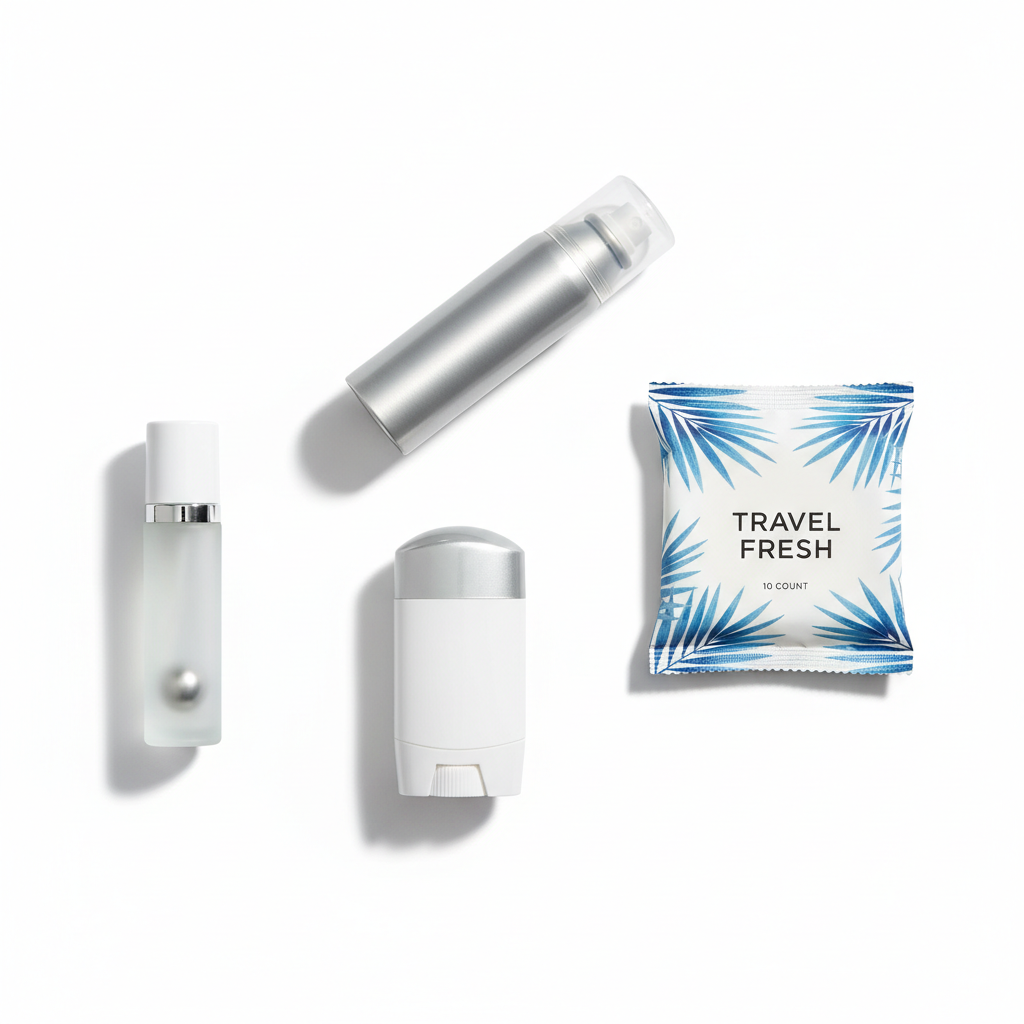
Stick (solid)
- Best for: predictable application, less mess, easy carry-on.
- Watch-outs: can drag on sensitive skin if you over-swipe; residue may transfer to dark clothes if applied too heavy.
Roll-on
- Best for: even coverage, lower residue on clothing.
- Watch-outs: needs time to dry; applying while rushing can feel sticky.
Mini spray
- Best for: quick refresh, less contact on irritated skin.
- Watch-outs: easy to under-apply; scent can feel strong in tight spaces.
Deodorant wipes
- Best for: mid-day reset when you can’t shower, especially during flights and conferences.
- Watch-outs: not always enough alone if you sweat heavily; treat them as a “clean slate” step.
Choosing the right formula: ingredients and claims that actually matter
Labels can be noisy, so focus on what changes your day-to-day experience.
- Antiperspirant actives (often aluminum salts) help reduce sweat. If you sweat a lot, a travel deodorant mini size that’s only deodorant may not match your needs.
- Odor control often comes from antimicrobial ingredients or odor neutralizers. Fragrance can help, but it’s not the same as controlling the source.
- Sensitive-skin cues: “fragrance-free” and “for sensitive skin” can be helpful starting points, though reactions vary.
According to the U.S. Food & Drug Administration (FDA), antiperspirants are regulated as over-the-counter drugs in the U.S., which is why they list an “active ingredient” panel.
If you’ve had irritation before, consider a patch test on a small area for a few days before your trip. It’s a boring step, but it beats learning the hard way on day one of a wedding weekend.
TSA and packing: what’s actually allowed in a carry-on?
Most solid sticks are simple because they’re not considered liquids. Sprays, gels, and roll-ons can fall under liquid rules depending on the product type.
- Solid stick: usually easiest for carry-on packing.
- Gel/cream/roll-on: often treated as liquids, so keep them within the 3.4 oz limit and in your clear quart bag.
- Aerosol spray: commonly allowed in limited quantities, but check current TSA guidance and airline rules if you’re unsure.
According to the Transportation Security Administration (TSA), carry-on liquids generally must follow the 3-1-1 rule, and some toiletry aerosols are permitted within size limits. When in doubt, pack the mini in your toiletry bag and keep it easy to inspect.
Comparison table: pick a mini based on your real constraints
If you want a quick decision, this is the cheat sheet I wish more people used before buying whatever is cheapest at the pharmacy travel rack.
| Travel situation | What usually goes wrong | Better mini choice | Extra move that helps |
|---|---|---|---|
| Long flight + tight connections | Reapplying over sweat | Stick antiperspirant mini or wipes + stick | Wipe, dry, then apply |
| Hot-weather city walking | Wetness + chafing | Antiperspirant mini | Apply at night on dry skin |
| Business travel, all-day meetings | Odor creep in clothes | Odor-control deodorant mini + spare undershirt | Rotate tops, air out fabric |
| Sensitive skin, shaving irritation | Stinging, redness | Fragrance-free sensitive mini | Apply after skin calms, not right after shaving |
| Gym on the road | “Clean but still smells” | Wipes + stronger odor-control mini | Change shirt, don’t re-wear |
A simple “midday reset” routine that works in real bathrooms
Here’s the practical part. If your day is already in motion, this is the lowest-effort routine that still makes a difference.
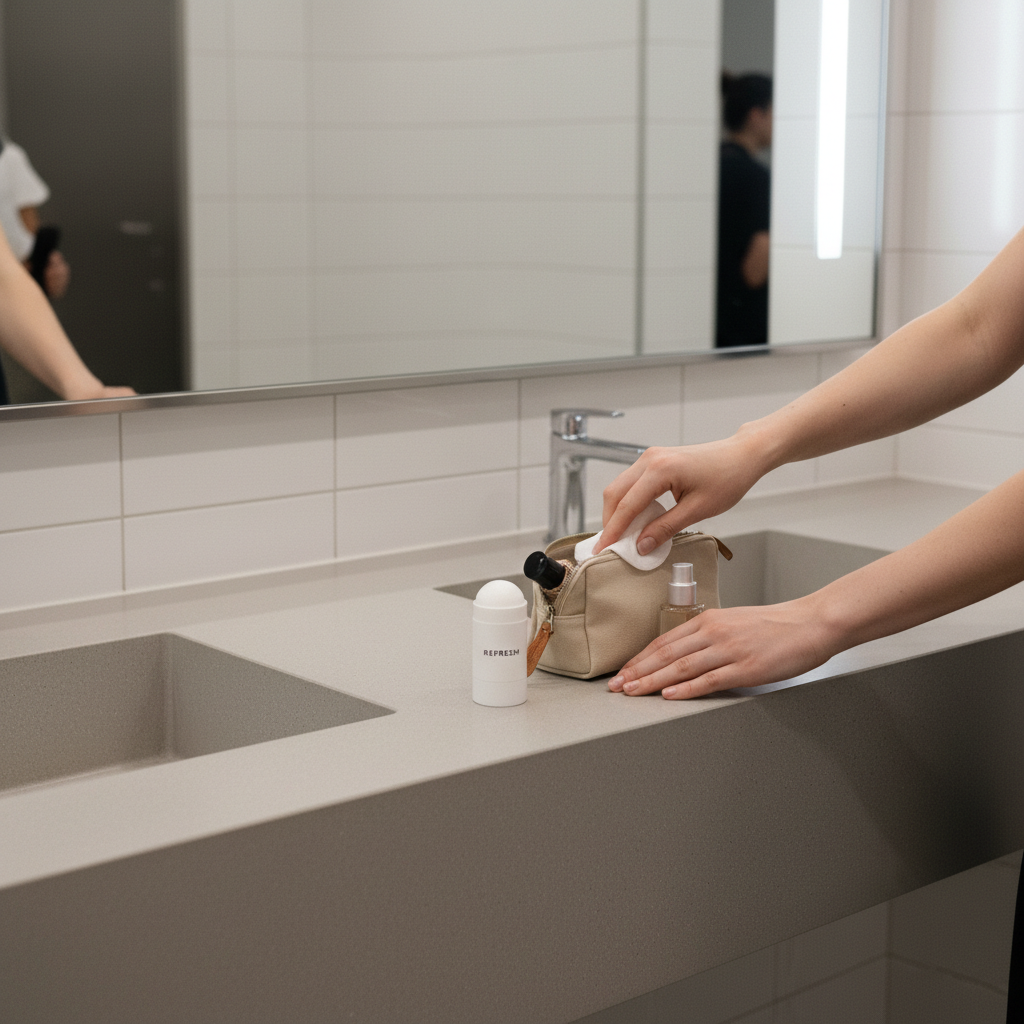
Step 1: create a clean, dry base. Use a wipe or damp paper towel to remove sweat, then dry with tissue. This one step is why people feel their mini “suddenly works.”
Step 2: apply enough product. Minis tempt you to be stingy. You want even coverage, not a single quick swipe.
Step 3: give it 30–60 seconds. If you immediately pull tight clothing back on, you increase transfer and reduce comfort.
Step 4: fix the fabric if needed. If your shirt already smells, deodorant can only mask so much. Swap layers or at least air the top out if you can.
Common mistakes (and the small tweaks that change the outcome)
- Buying “fresh scent” as a strategy: fragrance helps confidence, but odor management usually needs more than scent.
- Using antiperspirant only in the morning: many people get better results applying on dry skin at night, then touching up lightly in the morning.
- Switching products right before a big trip: if you’re prone to irritation, test at home first.
- Assuming mini equals travel-proof: heat in cars or checked bags can soften sticks and increase leaks for some formats, so use a small zip bag if you’re unsure.
Key takeaway: the “best” travel deodorant mini size is the one that matches your sweat level, doesn’t irritate your skin, and fits your reapply reality.
When it makes sense to ask a professional
If odor or sweating feels sudden, severe, or tied to other symptoms, it’s smart to talk with a clinician. Excessive sweating can have multiple causes, and skin irritation in the underarm area can overlap with dermatitis, infections, or shaving-related inflammation.
Also consider getting advice if you’ve tried multiple antiperspirants and still soak through clothing, or if you develop persistent rash, cracking, or pain. This article can’t diagnose, and treatment choices depend on your health history.
Conclusion: stay fresh without overpacking
A travel deodorant mini size can absolutely keep you comfortable, but it works best with two things: the right formula for your body, and a quick reset routine that avoids layering product over sweat. If you only do one change before your next trip, apply on dry skin and pack a wipe for midday.
If you want an easy next step, pick one mini that targets your main issue, then run a three-day test at home so travel day doesn’t become the trial run.
FAQ
What’s the difference between a travel deodorant mini size and a regular deodorant?
The main difference is packaging and volume, not necessarily strength. Minis can work just as well, but they run out faster, and people often under-apply to “save” them.
Is a mini deodorant considered a liquid for TSA?
Solid sticks usually are not treated as liquids, while gels, creams, roll-ons, and sprays often fall under the 3-1-1 rule. If you’re unsure, keep it in your quart bag to avoid delays.
Should I choose deodorant or antiperspirant for flights?
If wetness is the main issue, antiperspirant tends to perform better. If you mainly worry about odor, a deodorant plus wipes for a midflight reset can be enough.
Why does deodorant stop working halfway through a trip?
Common reasons include applying over sweat, re-wearing tops that hold odor, and changing your routine. Heat and stress can also shift how much you sweat, so a product that’s “fine at home” may feel weaker on the road.
Can I apply deodorant right after shaving?
It can sting, especially with fragrance or certain actives. Many people do better waiting until skin calms, and using a sensitive-skin formula, but irritation varies, so a patch test helps.
How many days does a mini deodorant usually last?
It depends on size and how generously you apply. If you plan to reapply daily, consider bringing a backup mini or pairing a stick with wipes to stretch usage.
What if my armpits smell even right after I reapply?
That often means you’re layering over sweat or odor on fabric. Wipe, dry, then apply, and if the shirt already smells, changing tops may do more than adding extra product.
If you’re trying to simplify your packing, a small kit with a travel deodorant mini size plus a few body wipes is often the sweet spot, it covers normal days and the unexpected “no time to shower” moments without turning your bag into a full bathroom cabinet.